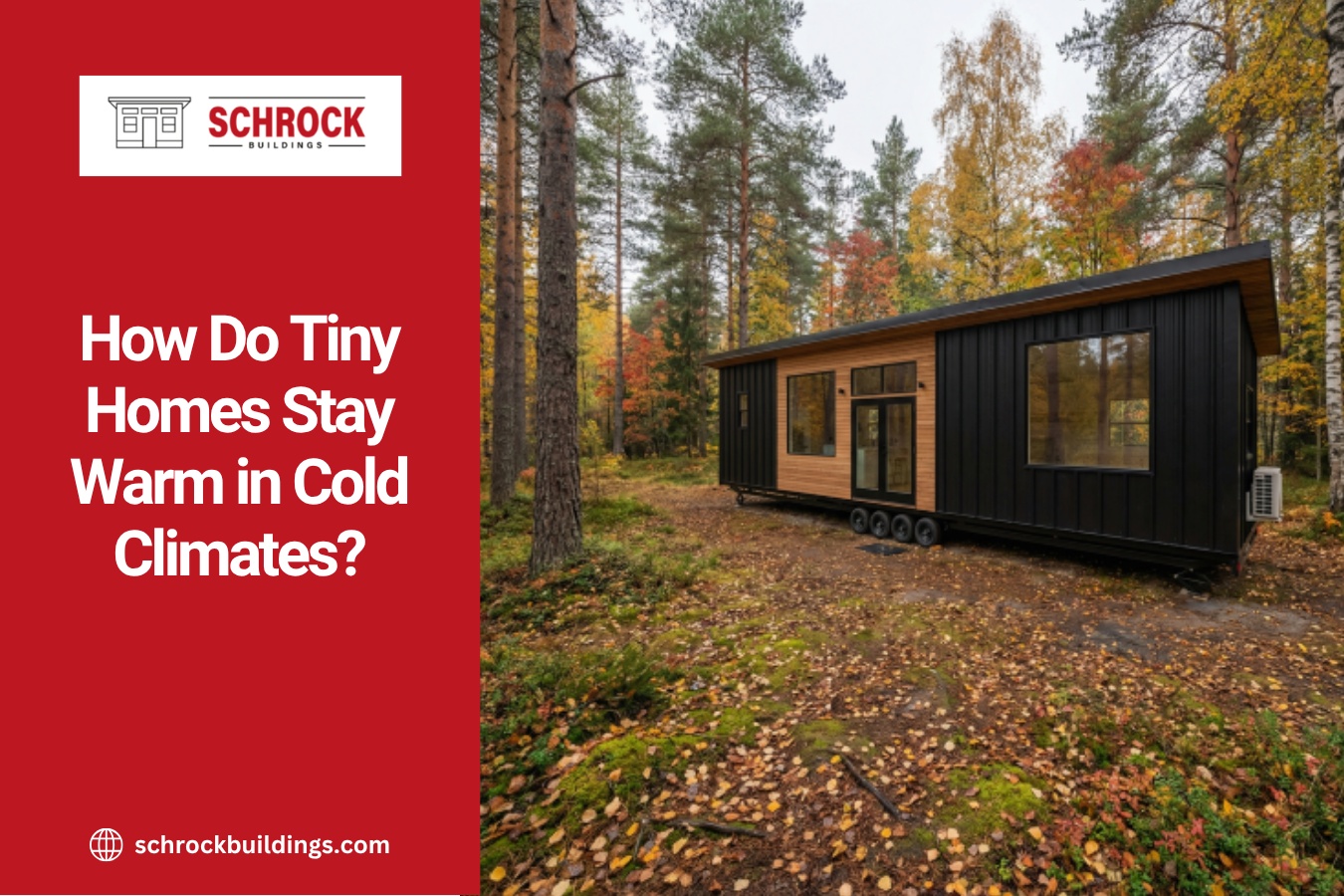
Tiny homes may be small, but that does not mean they have to feel cold when winter arrives.
In fact, a properly designed tiny home can stay comfortable even when temperatures outside drop. The key is not simply installing a powerful heater. Staying warm starts with the way the home is designed, insulated, and built.
For anyone considering tiny home living in Wisconsin or another area with cold winters, this is an important part of choosing the right home.
So, how do tiny homes stay warm in cold climates? Let’s look at the features that make the biggest difference.
Can Tiny Homes Stay Warm During Cold Climates?
Yes. A tiny home can be comfortable for year round living when it is designed for the climate where it will be used.
Since there is less interior space to heat compared with a traditional house, a well insulated tiny home can be surprisingly comfortable and efficient.
However, size alone does not make a tiny home warm.
The insulation, windows, doors, heating system, plumbing placement, and overall construction all play a role. This is why choosing a tiny home designed with cold weather in mind is so important.
1. Good Insulation Keeps Heat Inside
Insulation is one of the most important parts of keeping a tiny home warm.
Without enough insulation, heat can escape through the walls, ceiling, and floor. Your heating system then has to work harder to maintain a comfortable indoor temperature.
Schrock Buildings designs its tiny homes with northern climates in mind.
The standard insulation package includes R 21 insulation in the walls and R 30 insulation in the ceiling. There is also an option to upgrade to mineral wool with R 23 walls and an R 38 ceiling.
The floor also deserves attention because cold air underneath a tiny home can quickly affect the temperature inside. Spray foam insulation beneath the floor helps reduce drafts and adds another layer of protection.
Together, these features help keep warmth where you want it: inside your home.
2. The Walls Matter More Than You Might Think
Insulation works best when the rest of the structure supports it.
Schrock Buildings uses 2 by 6 wall construction with framing spaced 24 inches on center. This design provides more room for insulation while helping reduce thermal bridging.
Thermal bridging happens when heat finds an easier path through parts of a structure and escapes outside.
Reducing that heat loss helps the interior maintain a steadier temperature.
It may not be something you notice when looking at a finished tiny home, but what is inside the walls can make a big difference during a Wisconsin winter.
3. An Efficient Heating System Makes a Big Difference
Once a tiny home is properly insulated, it still needs a reliable source of heat.
Schrock Buildings uses high efficiency mini split systems in its Northern Light tiny homes. These systems provide both heating and cooling, making them useful throughout the year.
During winter, a mini split helps maintain a steady indoor temperature without taking up a large amount of living space.
That is especially useful in a tiny home where every square foot matters.
Instead of giving up valuable floor space for a large heating unit, homeowners can enjoy a more compact solution designed for efficient comfort.
4. Quality Windows Help Prevent Heat Loss
Windows bring natural light into a tiny home and can make a smaller space feel much more open.
But windows can also be a major source of heat loss if they are not chosen carefully.
Schrock Buildings uses double pane Low E glass to improve insulation while still allowing plenty of natural light inside.
This helps reduce heat transfer through the glass.
Quality windows and doors also work together with the insulation and heating system. When each part of the home is designed with energy efficiency in mind, maintaining a comfortable temperature becomes much easier.
5. Plumbing Needs Protection From Freezing
Staying warm is not only about personal comfort.
Your plumbing also needs protection during freezing weather.
In Schrock Buildings’ Northern Light models, plumbing is installed within insulated walls. This helps protect water lines from the extreme outdoor temperatures that can cause freezing.
It is an important detail for anyone planning to use a tiny home throughout the winter.
A beautiful home is great, but a year round tiny home also needs practical systems that continue working when the weather becomes challenging.
6. A Smaller Space Can Be Easier to Heat
One advantage of tiny home living is the compact interior.
There is simply less air and space that needs to be heated compared with a large traditional home.
However, the real benefit comes when that smaller space is paired with proper insulation and an efficient heating system.
Think of it this way.
A heater should not have to constantly replace heat that is escaping through poorly insulated walls, floors, windows, or ceilings. When the home holds onto warmth effectively, the heating system can focus on maintaining a comfortable temperature.
That combination is what makes a tiny home feel cozy instead of simply small.
7. Ventilation Still Matters During Winter
When it is freezing outside, opening a window is probably the last thing you want to do.
Still, a comfortable home needs fresh air.
Everyday activities such as cooking, showering, and even breathing add moisture to indoor air. In a compact home, that moisture can build up faster than it would in a much larger space.
Schrock Buildings offers an optional ERV system that supports fresh air ventilation while helping maintain energy efficiency.
Good ventilation can help manage moisture and support healthier indoor air without giving up the comfort you worked hard to keep inside.
What Should You Look for in a Cold Climate Tiny Home?
If you are shopping for a tiny home that will be used during cold winters, it helps to look beyond the floor plan and exterior style.
Pay attention to features such as:
- Wall, ceiling, and floor insulation
- Wall construction and framing
- Energy efficient windows and doors
- An efficient heating system
- Protected plumbing
- Proper ventilation
- Quality construction and materials
- A design intended for year round use
These details can have a much bigger impact on winter comfort than the size of the home itself.
Tiny Homes Built for Northern Climates
Schrock Buildings is located in Milltown, Wisconsin, so cold weather is not exactly a surprise around here.
Our Northern Light tiny homes are designed with year round comfort in mind. Models such as the Northern Light 10×28 and Northern Light 12×33 combine thoughtful insulation, protected plumbing, efficient heating and cooling, and practical layouts within a compact footprint.
The result is a tiny home designed to feel comfortable and functional through changing seasons.
Schrock Buildings is also family owned and focused on quality craftsmanship, durable materials, and personal service. Our tiny homes are constructed offsite in a controlled environment and can be delivered across the United States.
Whether you want a full time home, a comfortable retreat, or a simpler way to live, we can help you explore a design that fits your plans.
Does a Tiny Home Cost Less to Heat?
A smaller home generally has less interior space that needs to be heated, which can help reduce heating demands.
Still, the actual energy use will depend on several factors.
Your local climate, thermostat settings, insulation, number of windows, home size, and heating system all affect how much energy you use.
That is why good construction matters.
Instead of focusing only on square footage, look at how the entire home works together to keep heat inside. A well designed tiny home gives you a much stronger starting point for efficient winter comfort.
Is a Tiny Home Right for Cold Weather Living?
If you love the idea of tiny living but worry about winter, cold weather does not have to stop you.
The important thing is choosing a tiny home that was designed with year round living in mind.
Proper insulation helps hold warmth inside. Quality windows reduce heat loss. Efficient heating keeps the interior comfortable. Protected plumbing helps the home continue functioning when temperatures fall.
When all of these features work together, a tiny home can become a warm and welcoming place to come home to, even on a cold winter day.
Ready to Find Your Tiny Home?
Cold winters should not mean giving up the freedom and simplicity of tiny home living.
At Schrock Buildings, we build thoughtfully designed tiny homes with quality materials, practical layouts, and features made for year round comfort. Our team can help you explore the available models and find options that fit your needs, lifestyle, and location.
Ready to see what your tiny home could look like?
Get started today and request a quote from Schrock Buildings. Tell us what you have in mind, and our team can help you take the next step toward a comfortable tiny home built for the way you want to live.
Still have questions about insulation, layouts, delivery, or choosing the right model? Contact Schrock Buildings today. We would be happy to help you explore your options.