
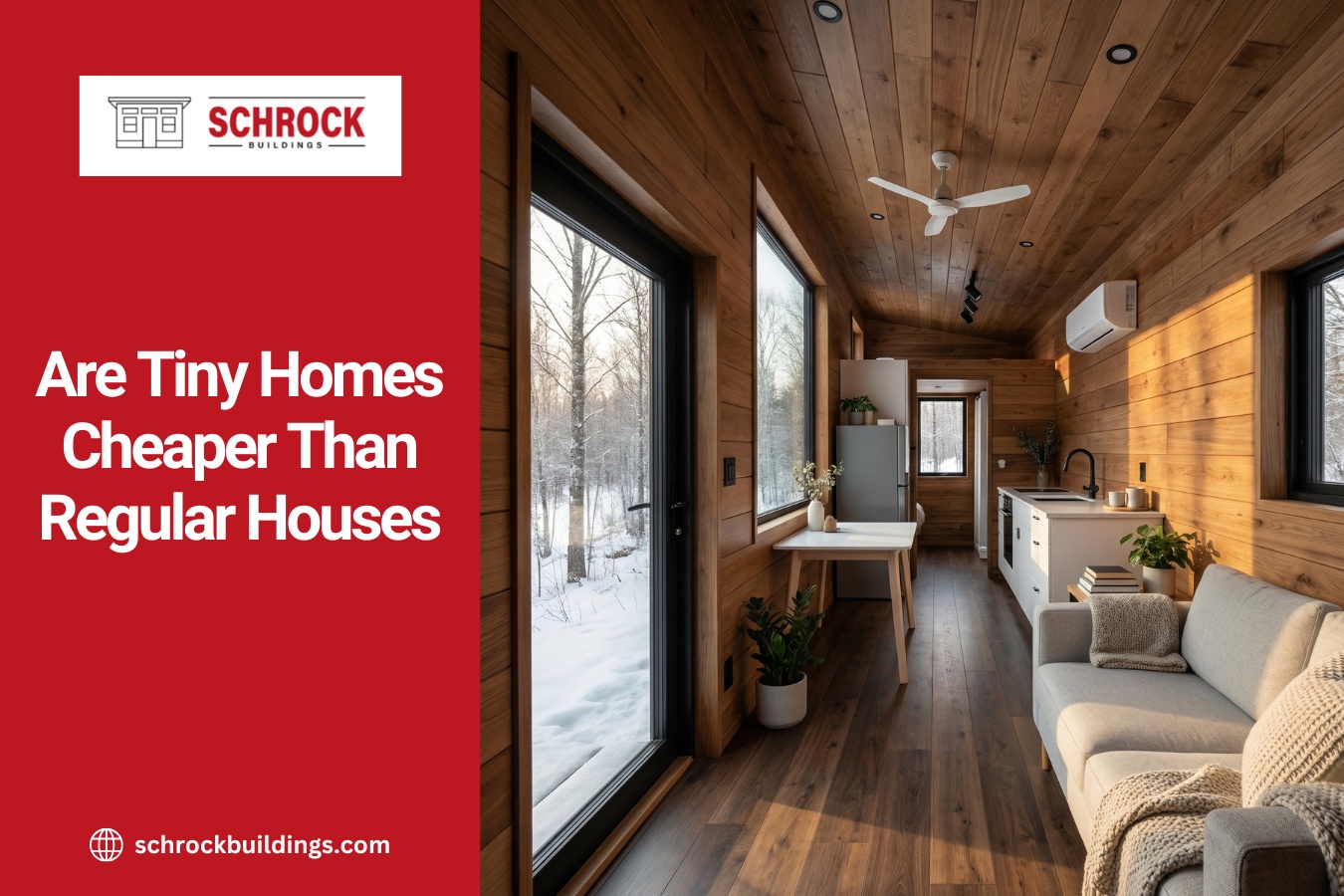
Many people today are asking the same question: Are tiny homes cheaper than regular houses?
The short answer is yes, in many cases they can be.
Tiny homes often cost less to build, less to maintain, and less to furnish than traditional houses. They can also help reduce monthly expenses and give homeowners a simpler way to live. But like any major purchase, the real answer depends on your goals, your location, and how you plan to use the space.
For some buyers, a tiny home is the perfect affordable solution. For others, a larger traditional house may still make sense.
At Schrock Buildings, many customers explore tiny home style buildings because they want practical space, custom design options, and a smarter way to invest in property. Whether you need a full time living space, guest house, backyard retreat, office, or vacation setup, tiny home inspired structures are becoming more popular for good reason.
Let’s break it all down in a simple way.
What Is a Tiny Home?
A tiny home is a smaller living space designed to maximize every square foot. While sizes vary, many tiny homes are far smaller than traditional houses.
They are often built with smart layouts that include:
- Kitchen areas
- Bathrooms
- Sleeping lofts or bedrooms
- Storage solutions
- Living spaces
- Multi purpose furniture areas
Tiny homes focus on efficiency and comfort without unnecessary wasted space.
Some people choose tiny homes as their main residence. Others use them as:
- Guest homes
- Rental properties
- Backyard living spaces
- Home offices
- Vacation cabins
- Downsizing solutions
This flexibility is one reason tiny homes continue to grow in popularity.
Are Tiny Homes Really Cheaper?
In many situations, yes.
Tiny homes are often cheaper because they use:
- Less building material
- Smaller foundations or site prep needs
- Lower heating and cooling costs
- Less maintenance over time
- Reduced furnishing costs
- Lower utility usage
A smaller space usually means lower overall ownership costs.
However, not every tiny home is automatically cheap. High end finishes, custom layouts, specialty features, land costs, permits, and utility hookups can increase the total investment.
That is why it helps to compare the full picture instead of only the base price.
Comparing Tiny Homes vs Regular Houses
1. Initial Purchase Cost
Traditional houses usually cost more because they are larger and require more materials, labor, and land development.
Tiny homes generally start lower because of their smaller size.
For buyers who want an affordable path to ownership, this can be a major advantage.
2. Monthly Utility Bills
A smaller home often means lower monthly costs for:
- Electricity
- Heating
- Cooling
- Water use
Many tiny home owners enjoy lower bills simply because there is less space to power and maintain.
3. Maintenance Costs
Larger homes often need more repairs over time. More roofing, more siding, more flooring, more windows, and more systems usually mean more upkeep.
Tiny homes can be easier and less expensive to maintain.
4. Furnishing Costs
Filling a large house with furniture can become expensive quickly.
Tiny homes need fewer items, and many use built in storage or dual purpose furniture to save space.
5. Lifestyle Costs
Some homeowners find that tiny living encourages smarter spending and less clutter. Many people buy fewer unnecessary items because space is more intentional.
That can lead to long term savings.
Why More Buyers Are Considering Tiny Homes
Tiny homes are not only about saving money. They also appeal to people who want more freedom and simplicity.
Common reasons include:
- Lower housing costs
- Less cleaning
- Easier upkeep
- More efficient living
- Flexible property use
- Modern minimalist lifestyle
- Guest or rental income opportunities
- Backyard family living solutions
For many people, tiny homes represent a practical lifestyle shift.
When a Regular House Might Make More Sense
Tiny homes are not perfect for everyone.
A traditional house may be better if you need:
- Multiple large bedrooms
- Extra storage space
- Large family living areas
- Dedicated hobby rooms
- Long term expansion room
- Larger resale market expectations
If your household needs more square footage daily, a regular house may offer better comfort.
The right choice depends on how you live.
Hidden Costs to Consider With Tiny Homes
It is smart to understand the full cost before buying any structure.
Some buyers focus only on the building price and forget other possible expenses.
These may include:
- Land purchase
- Site preparation
- Utility hookups
- Permits if required
- Delivery and setup
- Interior finishing choices
- Appliances
- Landscaping
The good news is that even with these factors, many tiny home buyers still find the total cost attractive compared with traditional housing.
Why Custom Tiny Home Buildings Are a Smart Option
One of the best ways to get value is choosing a quality structure designed for your goals.
At Schrock Buildings, customers appreciate having options that help them create practical small living spaces with style and durability.
Instead of settling for a one size fits all design, you can explore custom solutions that fit your property and lifestyle.
That means better long term satisfaction and smarter use of your investment.
Popular Tiny Home Uses From Schrock Buildings Customers
Many people think tiny homes only mean full time living. In reality, there are many creative ways to use a compact building.
Backyard Guest House
Give family or guests a private, comfortable place to stay.
Home Office
Create a quiet workspace separate from the main house.
Hobby Studio
Use your building for crafts, art, music, or personal projects.
Vacation Retreat
Turn your property into a peaceful getaway.
Rental Opportunity
Depending on local rules, a tiny home style space may create added income potential.
Downsizing Space
Perfect for homeowners who want simpler living with lower upkeep.
Can Tiny Homes Increase Property Value?
A well designed additional structure can add appeal to a property, especially when it offers useful extra space.
Potential buyers often value:
- Guest accommodations
- Office space
- Workshop areas
- Backyard retreats
- Flexible bonus buildings
While every market is different, useful quality structures can be a smart property improvement.
How to Decide If a Tiny Home Is Right for You
Ask yourself these questions:
How much space do I truly use now?
Many people realize they use only part of their current home daily.
Do I want lower monthly costs?
A smaller space can often help reduce expenses.
Am I downsizing or simplifying life?
Tiny homes are great for intentional living.
Do I need a second living space on my property?
Guest housing or family living space is a common reason buyers choose tiny homes.
Do I want something custom and practical?
A flexible building can often meet changing needs over time.
Why Buyers Choose Schrock Buildings
When considering a tiny home style building, quality matters.
Schrock Buildings is known for structures that combine craftsmanship, durability, and customization. Buyers want more than just a small building. They want something dependable that looks great and works for years.
Customers often choose Schrock Buildings because of:
- Quality materials
- Strong construction
- Attractive designs
- Flexible size options
- Custom features
- Helpful customer service
- Buildings made for real life use
That combination helps buyers feel confident in their investment.
Tiny Home Living Is About More Than Price
While saving money is important, many tiny home owners say the biggest benefit is peace of mind.
Less clutter.
Less wasted space.
Less maintenance.
More focus on what matters.
For many families and individuals, that lifestyle shift becomes just as valuable as the lower costs.
Common Questions About Tiny Homes
Are tiny homes cheaper to heat and cool?
Usually yes. Smaller spaces often require less energy.
Can tiny homes feel comfortable?
Absolutely. Good layouts make a big difference.
Are tiny homes good for guests?
Yes. They are popular for guest accommodations.
Can I customize my tiny home space?
Yes. Custom design options help create a space that fits your needs.
Are tiny homes only for full time living?
No. Many people use them as offices, studios, rentals, or vacation spaces.
Final Answer: Are Tiny Homes Cheaper Than Regular Houses?
In many cases, yes.
Tiny homes are often cheaper than regular houses because they cost less to build, maintain, heat, cool, and furnish. They can be a smart choice for buyers who want affordability, flexibility, and simpler living.
However, the best value comes from choosing the right structure for your goals.
That is where Schrock Buildings can help.
Whether you want a guest home, backyard retreat, office, or tiny home inspired living space, quality design makes all the difference.
Ready to Explore Your Tiny Home Options?
If you are thinking about a tiny home or compact custom building, Schrock Buildings is ready to help you create the right solution.
Get started with a quote today and explore options built for your property and lifestyle.
Contact us now to learn more about sizes, customization, and pricing.