
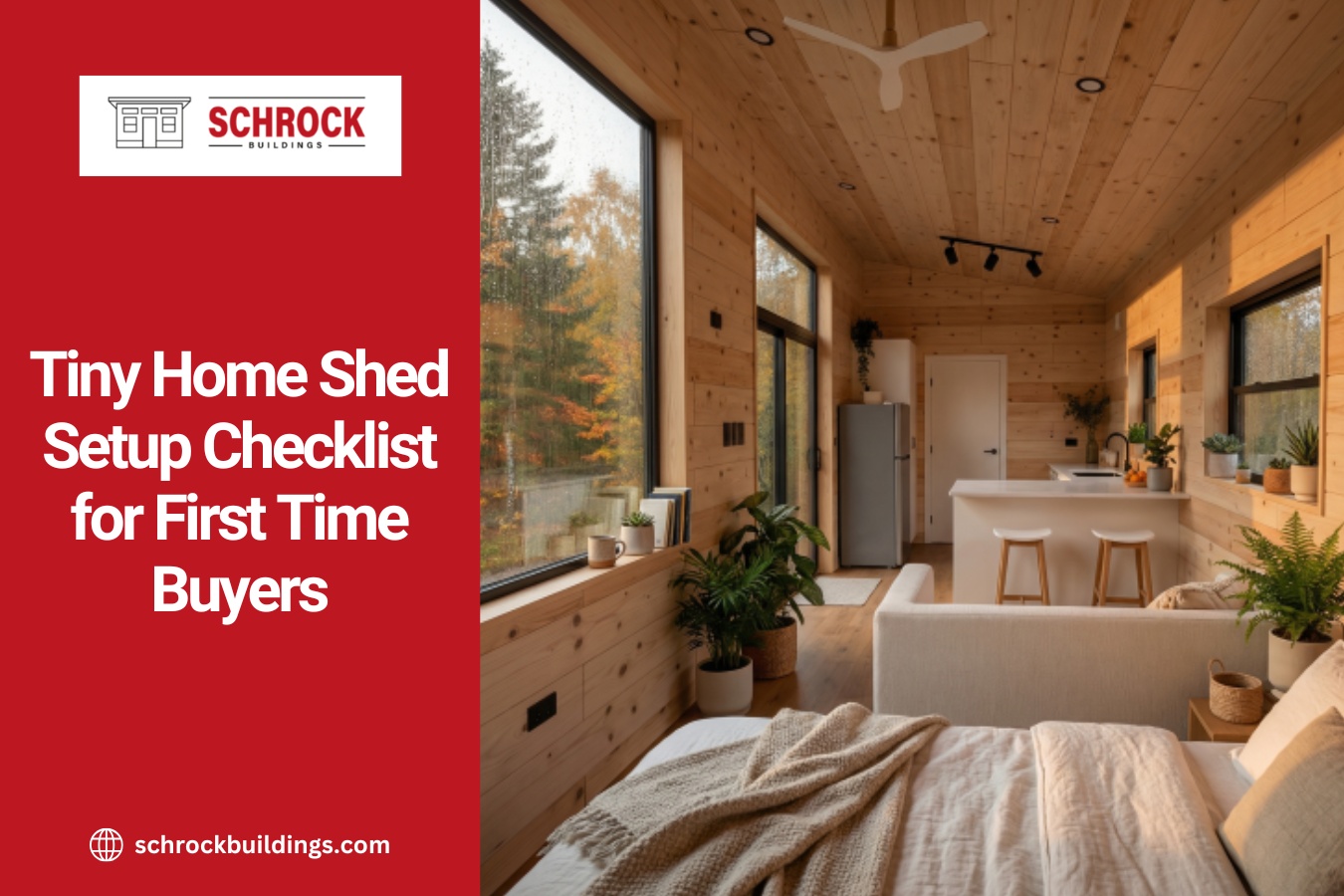
Buying a tiny home shed is exciting. It gives you the chance to create a simpler lifestyle, reduce housing costs, and enjoy a space that is designed around your needs. Whether you are planning to use your tiny home shed as a full time residence, a guest house, a retirement retreat, or a private getaway, proper planning is the key to success.
Many first time buyers focus heavily on choosing the right building but forget about everything that happens before and after delivery. Questions about land preparation, utilities, storage, furniture, permits, and daily living often come up once the project is already underway.
The good news is that a little preparation can save time, money, and stress.
This tiny home shed setup checklist will walk you through everything you need to consider before your building arrives and after it is installed. By the end, you will have a clear roadmap that helps turn your tiny home dream into a comfortable reality.
At Schrock Buildings, we help customers throughout Wisconsin find quality portable buildings and tiny home solutions that fit their lifestyle. Our team understands that every customer has unique goals, which is why we offer customizable options designed to make your transition into tiny living easier.
Why Planning Matters Before Your Tiny Home Shed Arrives
A tiny home shed may have a smaller footprint than a traditional home, but it still requires thoughtful preparation.
Without a clear plan, buyers can encounter unexpected expenses, delays, or layout challenges that affect their overall experience.
Proper planning helps you:
- Choose the right building size
- Prepare your property correctly
- Budget accurately
- Plan utility connections
- Maximize available space
- Avoid costly mistakes
- Create a comfortable living environment
The more prepared you are before installation, the smoother the entire process becomes.
Step 1: Define How You Will Use Your Tiny Home Shed
Before selecting a building, determine exactly how you plan to use it.
Different uses often require different layouts, sizes, and features.
Ask yourself:
- Will this be a full time residence?
- Will it be a guest house?
- Will it serve as a weekend retreat?
- Will family members use it?
- Will you work remotely from the space?
- Will you need extra storage?
Your answers help determine the overall design and functionality of your tiny home shed.
For example, a weekend getaway may require fewer amenities than a full time residence. Someone working remotely may need dedicated office space, while a retired couple may prioritize comfort and storage.
Step 2: Choose the Right Location on Your Property
Location is one of the most important decisions you will make.
Take time to evaluate your property and identify the best placement area.
Consider:
Accessibility
The building should be easy to reach throughout the year.
Think about:
- Driveway access
- Walking paths
- Parking availability
- Snow removal during winter months
Drainage
Avoid placing your tiny home shed in low lying areas where water may collect after rain or snow melts.
Proper drainage helps protect the structure and keeps the surrounding area dry.
Sunlight
The amount of natural light your building receives can impact comfort and energy efficiency.
Observe your property throughout the day and determine where sunlight falls.
Privacy
Many tiny home owners appreciate a sense of separation from neighboring properties.
Trees, landscaping, and thoughtful placement can create a more peaceful environment.
Step 3: Understand Local Requirements
Before purchasing a tiny home shed, check local regulations that may apply to your property.
Requirements can vary based on location and intended use.
Areas to research include:
- Building permits
- Setback requirements
- Utility requirements
- Occupancy regulations
- Property restrictions
Understanding these requirements early can help prevent delays later.
Step 4: Select the Right Tiny Home Shed Size
One of the biggest mistakes first time buyers make is choosing a building that is too small.
While tiny living focuses on efficiency, you still need enough room to live comfortably.
Think about:
Number of Occupants
Will one person live there or multiple people?
Additional occupants typically require more sleeping and storage space.
Daily Activities
Consider how you spend your time.
Do you cook often?
Do you work from home?
Do you entertain guests?
Your lifestyle should influence your layout decisions.
Future Needs
Think beyond your immediate needs.
A slightly larger building may provide flexibility for future changes.
Step 5: Create a Realistic Budget
Your budget should include more than the building itself.
Many first time buyers underestimate setup costs.
Include expenses such as:
- Building purchase
- Site preparation
- Utility connections
- Interior finishes
- Appliances
- Furniture
- Landscaping
- Permits
- Delivery
Creating a complete budget gives you a realistic understanding of the total project cost.
Step 6: Prepare the Building Site
Site preparation is one of the most important steps in the process.
A properly prepared site provides a stable foundation for your tiny home shed.
Common preparation tasks include:
Clearing the Area
Remove:
- Trees
- Brush
- Rocks
- Debris
Leveling the Ground
A level surface helps ensure proper installation and long term structural performance.
Improving Drainage
Good drainage helps protect your investment from water related issues.
Step 7: Plan Your Utility Connections
A comfortable tiny home shed requires careful utility planning.
Think through each utility before installation.
Electricity
Determine:
- Power source
- Panel requirements
- Lighting needs
- Appliance requirements
Water
Consider:
- Well connections
- Municipal water connections
- Water storage options
Sewer and Waste Management
Options may include:
- Septic systems
- Municipal sewer connections
Internet
Reliable internet is increasingly important for work, entertainment, and communication.
Plan ahead if remote work is part of your lifestyle.
Step 8: Design an Efficient Floor Plan
Every square foot matters in a tiny home shed.
An efficient layout can make a small space feel surprisingly comfortable.
Focus on:
Open Living Areas
Open floor plans help maximize usable space.
Multi Purpose Furniture
Look for furniture that serves more than one purpose.
Examples include:
- Storage benches
- Fold down tables
- Sofa beds
- Lift top storage units
Smart Traffic Flow
Avoid layouts that feel cramped or difficult to navigate.
Careful planning improves both comfort and functionality.
Step 9: Prioritize Storage Solutions
Storage is often the biggest challenge in tiny living.
The goal is to make every inch work harder.
Consider:
Vertical Storage
Use wall space whenever possible.
Built In Storage
Built in shelving and cabinets can significantly increase storage capacity.
Under Furniture Storage
Beds, benches, and seating areas can provide hidden storage opportunities.
Seasonal Rotation
Store only what you need regularly and rotate seasonal items as needed.
Step 10: Choose Energy Efficient Features
Energy efficiency can help reduce monthly expenses and improve comfort.
Look for features that support year round living.
Consider:
- Quality insulation
- Efficient windows
- Energy efficient appliances
- LED lighting
- Proper ventilation
These features can make a noticeable difference over time.
Step 11: Plan Your Kitchen Carefully
The kitchen often serves as the heart of a tiny home.
Even in a smaller space, functionality matters.
Think about:
Cooking Habits
Do you prepare meals daily or occasionally?
Your answer can help determine appliance needs.
Storage Requirements
Plan cabinet space carefully to avoid clutter.
Counter Space
Adequate workspace can make cooking much easier.
A well designed kitchen improves daily life significantly.
Step 12: Create a Comfortable Bathroom
A small bathroom can still feel comfortable and practical.
Focus on:
- Efficient fixtures
- Adequate storage
- Easy cleaning surfaces
- Good ventilation
Thoughtful planning can make even compact bathrooms highly functional.
Step 13: Think About Heating and Cooling
Wisconsin weather can vary significantly throughout the year.
A comfortable climate control system is essential.
Consider:
- Heating systems
- Cooling systems
- Insulation levels
- Air circulation
Comfort throughout all seasons should be part of your planning process.
Step 14: Personalize the Interior
One of the most enjoyable parts of the process is making the space your own.
Add personal touches that reflect your style and personality.
Ideas include:
- Decorative lighting
- Area rugs
- Wall art
- Custom shelving
- Accent colors
Even small details can make a tiny home feel warm and inviting.
Step 15: Plan Outdoor Living Areas
Tiny home owners often extend their living space outdoors.
A well designed outdoor area can dramatically increase usable space.
Popular options include:
Decks
A deck creates a natural extension of the interior living area.
Seating Areas
Outdoor seating provides space for relaxation and entertaining.
Fire Pit Areas
These spaces encourage gathering and enjoyment throughout the year.
Landscaping
Trees, shrubs, and flowers can improve privacy and visual appeal.
Common Mistakes First Time Buyers Should Avoid
Learning from others can save time and money.
Here are a few common mistakes to avoid.
Choosing the Smallest Option Available
Saving space is important, but comfort matters too.
Ignoring Storage Needs
Storage often becomes an issue after moving in.
Plan for it early.
Forgetting Utility Costs
Utility installation can add to the overall project budget.
Skipping Site Preparation
Proper site preparation supports long term performance.
Rushing the Planning Process
Taking extra time during planning usually leads to better results.
Why More Buyers Choose Schrock Buildings for Tiny Home Solutions
When investing in a tiny home shed, quality matters.
At Schrock Buildings, we understand that customers are looking for more than just a building. They are creating a lifestyle and investing in their future.
Our team focuses on helping customers find solutions that fit their goals, budget, and property.
Benefits of working with Schrock Buildings include:
- High quality craftsmanship
- Durable materials
- Customization options
- Helpful guidance throughout the process
- Buildings designed for long term value
- Friendly customer service
Whether you are just starting your research or ready to move forward, our team is here to help you navigate the process with confidence.
Your Tiny Home Journey Starts with the Right Plan
A tiny home shed can provide freedom, flexibility, and a simpler way of living. The key to success is thoughtful planning before your building arrives.
By following this setup checklist, you can avoid common mistakes and create a space that works for your lifestyle from day one.
Remember that every decision matters, from selecting the right location and size to planning utilities and storage.
When done correctly, a tiny home shed can become one of the most rewarding investments you make.
Get Started with Schrock Buildings
Ready to take the next step toward tiny living?
Schrock Buildings offers quality tiny home shed solutions designed to help you create a comfortable and functional space that fits your needs.
Request a quote today and let our team help you find the right building for your property, lifestyle, and budget.
Contact Us Today
Have questions about tiny home sheds, customization options, delivery, or setup?
Contact Schrock Buildings today. Our knowledgeable team is happy to help you explore your options and guide you through every step of the process.
Your dream tiny home shed may be closer than you think.